 ×
HOME
THE BAND
GALLERY
BOOK US
FUNCTION
WEDDINGS
LIVE GIGS
CORPORATE EVENTS
PRIVATE PARTIES
BLOGS
×
HOME
THE BAND
GALLERY
BOOK US
FUNCTION
WEDDINGS
LIVE GIGS
CORPORATE EVENTS
PRIVATE PARTIES
BLOGS
Email:
info@salutband.com
Phone:
+ 447595715012
×
HOME
THE BAND
GALLERY
BOOK US
FUNCTION
WEDDINGS
LIVE GIGS
CORPORATE EVENTS
PRIVATE PARTIES
BLOGS
Email:
info@salutband.com
Phone:
+ 447595715012
More Than Just Sound: Why Live Music Hits Different
There is a reason why people attend music concerts of their favourite singers. Even though concerts are completely different from live bands, both are still a place for people to listen to music while being surrounded by others. All this creates a whole new sense of experience that you just cannot get from listening to Spotify.
It’s not because you hired professionals like the Salut Band. There are actual scientific reasons behind why we get an emotional high from being at a live music event as compared to listening to an album or recording of the same song.

When people hear a live musician perform in front of a crowd, the musician is providing a shared human experience through emotion. These performers are not just repeating sounds but rather sharing their emotional interpretation through their body's movement, expression and energy.
The human brain's wiring is designed to work when we are around other people. Watching a singer exhale before a chorus of the song, watching a drummer when he or she is about to build intensity, or looking a performer in the eye, all activate our social and emotional parts of our brains.
Thus, the response you will have to live music will be much more emotionally visceral than if you'd listened to that same song on CD.
Dopamine is simply a hormone that indicates the brain that something good is happening causing it to spike up. This puts the brain in a relaxing or energetic zone, which ultimately makes you feel lively and excited. Live music also releases this hormone.
The uncertainty of how music will be presented (for example, the band could repeat multiple choruses or the vocalist could sing the song differently than expected) increases your anticipatory responses, which leads you to make an increase in your dopamine levels.
You will also release dopamine through musical experiences, by listening to the drummer, seeing the performers or being in the same area where everyone is listening to that same music together.


Let’s not forget that a live band is performing not just for you, but for all the people present in the room. This means that everyone is sharing the same space and experience. Also, in these situations, we sometimes copy each other.
You notice if someone is doing a particular dance step, then you too suddenly find yourself doing the same. And the reason for this is simple, because it’s fun and no one is judging you since everyone is busy and the dopamine is sky high.
Therefore, instead of experiencing a private moment while enjoying the music yourself, a live band creates a group moment for the audience to enjoy. This sparks a sense of togetherness.
When several different senses are activated at the same time, our brains work much better at taking in and processing information. Live music combines many different elements such as sound, sight, movement or lighting effects, all of these provide a richer overall sensory experience.
Because of all this, real-time performances are remembered for a long time, since the sound is not tied to a mobile or a computer. It’s actually coming live with visuals and emotions. This gives our brain something to form.
.jpg)
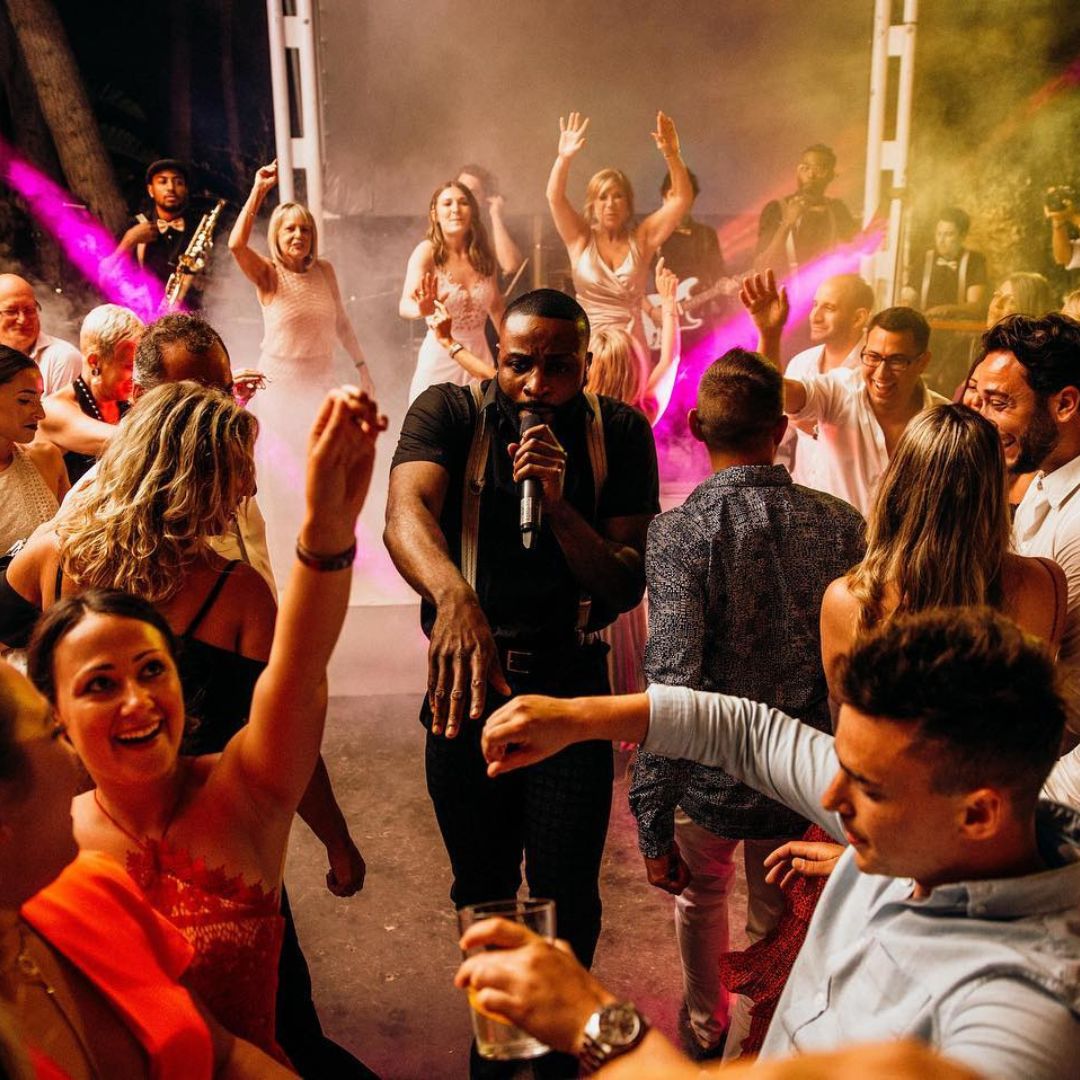
When musicians or performers see their audience dancing and vibing to the songs, they get this feeling which forces them to play with more energy. Those additional energy levels create a new sense of excitement in the audience.
One of the main skills that most professional bands have is that they can read everyone's energy and reactions around them. They know if a song or a performance act is doing its job or not. Depending on this they will decide what to do next and what new changes can be made.