 ×
HOME
THE BAND
GALLERY
BOOK US
FUNCTION
WEDDINGS
LIVE GIGS
CORPORATE EVENTS
PRIVATE PARTIES
BLOGS
×
HOME
THE BAND
GALLERY
BOOK US
FUNCTION
WEDDINGS
LIVE GIGS
CORPORATE EVENTS
PRIVATE PARTIES
BLOGS
Email:
info@salutband.com
Phone:
+ 447595715012
×
HOME
THE BAND
GALLERY
BOOK US
FUNCTION
WEDDINGS
LIVE GIGS
CORPORATE EVENTS
PRIVATE PARTIES
BLOGS
Email:
info@salutband.com
Phone:
+ 447595715012
If you have been handed the job of finding corporate event entertainment in London, you already know the pressure. The venue is booked, the guest list is set, and the whole evening now depends on whether the room comes alive or quietly checks the time.
.png)
Live music is one of the most reliable ways to get that right. This guide covers what to decide and in what order: which format suits which moment, when to book, and the practical points (licences, sound limits, power) that tend to catch organisers out.
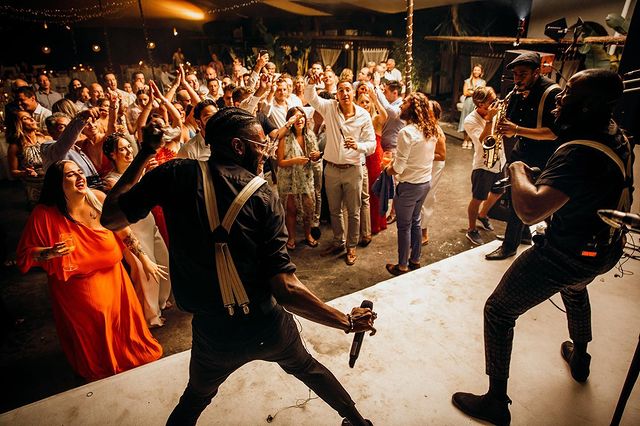
Business events are big business. The UK events industry is worth an estimated £68.7 billion, according to the UKEVENTS UK Events Report 2025, which also forecasts growth of 3 to 5% a year through 2027. In the previous report, business events accounted for £33.6 billion of a £61.65 billion industry. Companies are still choosing to get people in a room together, and the entertainment is what people remember afterwards. You can see how that is shaping the year ahead in our look at party band trends for weddings and corporate events in London for 2026.
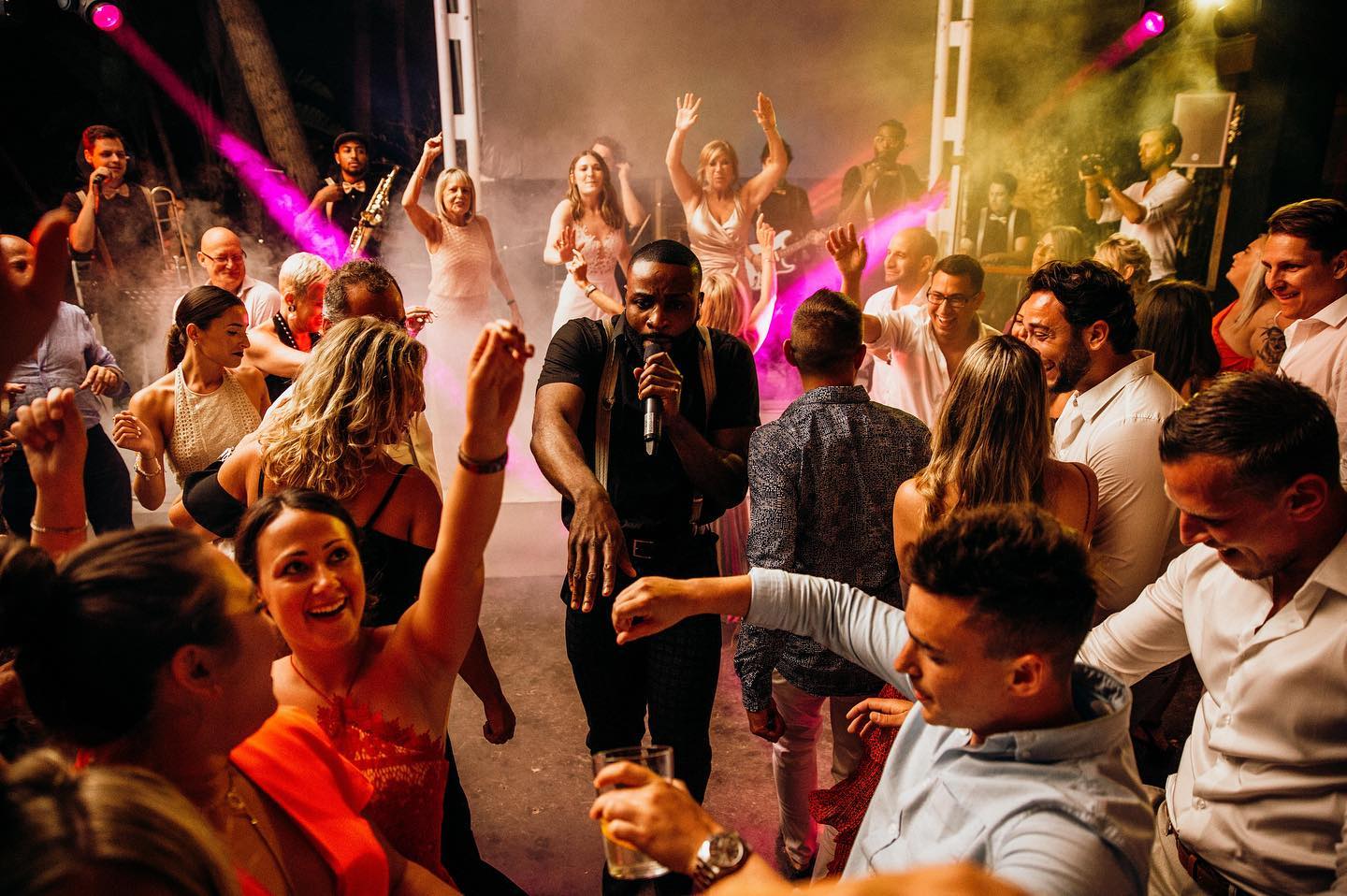
There is some science behind that. A 2025 study in Personality and Social Psychology Bulletin ran four studies with 789 participants and found that the shared sense of connection at live music events was linked to greater happiness a week later. It relied on people's recollections, it showed correlation rather than cause, and it looked at concerts rather than office parties. So treat it as a pointer, not a promise. But it fits what we see every week: colleagues who barely speak in the office end up singing the same chorus.
A DJ can fill a dancefloor. A live band does something slightly different. It reads the room, changes pace, and gives guests something to watch as well as dance to. If you want more on that, we have written about why live music feels more exciting.
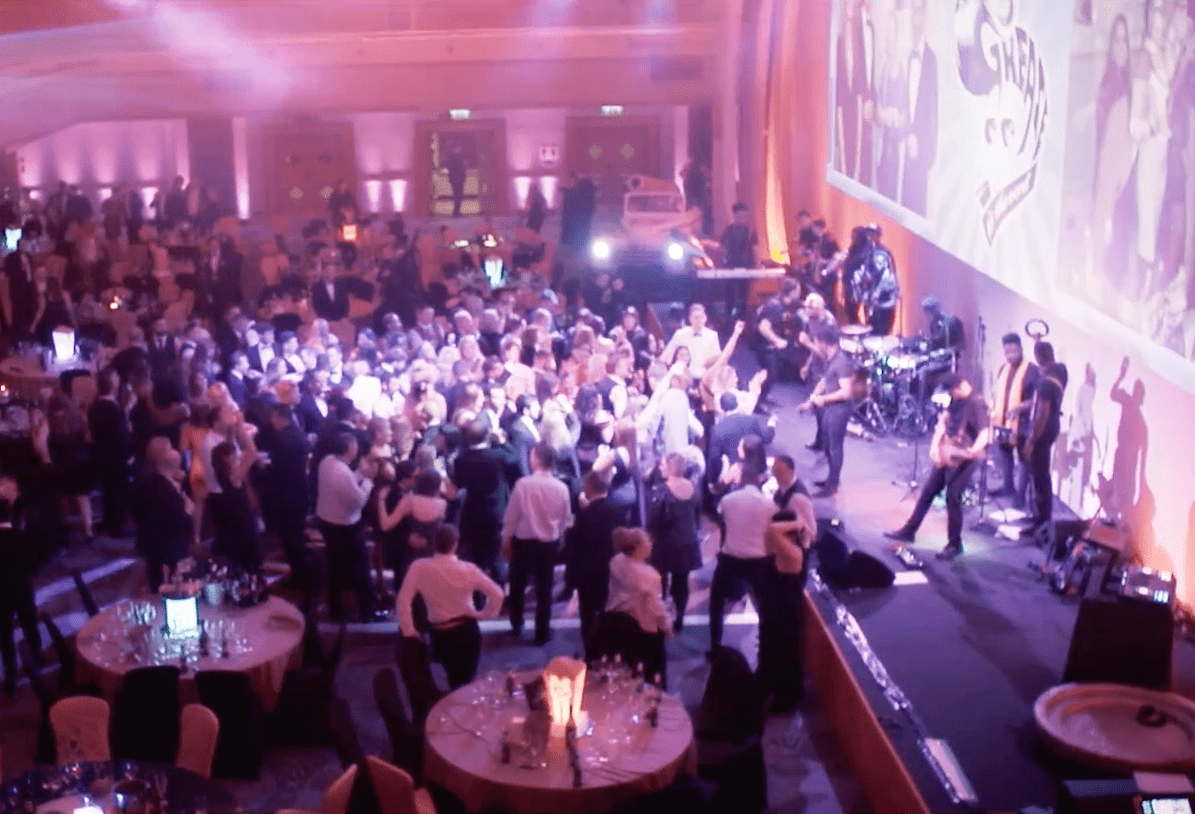
Salut is a London-based live band, founded in 2013 and known for funk, soul and pop. We play corporate events of all sizes, including:
- Product launches and business launches
- Award nights and annual functions
- Conferences and seminars
- Team-building events
- Brand activations and PR events
- Trade showsCharity balls
- Christmas parties and corporate dinners
- Celebrity events and TV wrap shows
- New Year's Eve celebrations
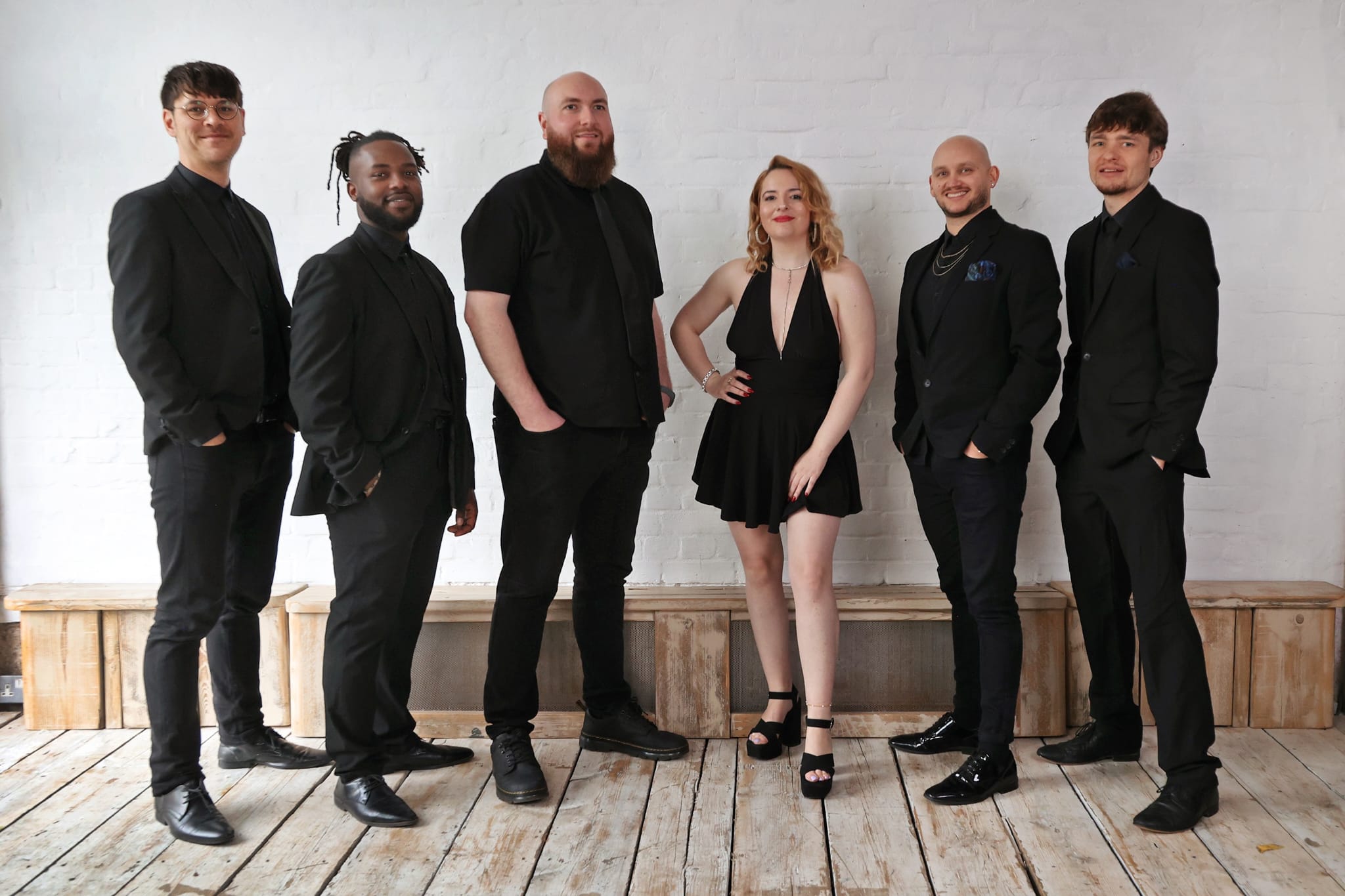
Our FAQ mentions performances everywhere from Claridge's and The Savoy to Dubai, Cannes and New York, and we regularly travel across the UK and abroad. Whatever the setting, the aim is the same: a polished evening that reflects well on your brand. For a closer look at what suits a company celebration, see our guide to the best party band for corporate events in 2026.

Not every part of a corporate evening needs a full band. That is why we offer a range of formats, so the music can change as the night does. If you are unsure how they differ, our guide to understanding different band types is a good place to start.
Cocktail band: instrumental, smooth and relaxed, a backdrop for the drinks reception.
Roaming band: the "vibe starter". They move through your drinks reception or dinner and get guests singing.
Jazz trio: a touch of class for a reception or a formal dinner.
5 to 7 piece party band: the same energy in a smaller package, ideal for tighter spaces.
8 to 9 piece party band: our signature setup, with multiple vocalists and a brass section. A typical eight-piece has drums, bass, guitar, keys, trombone, sax and two singers.
10+ piece show band: for the big occasions. We can go up to a twenty-piece show band if the event calls for it.
DJ and DJ Live: a DJ to carry the party into the night, or DJ Live, where our musicians join the DJ. That works well as an after-party or when space is limited.
Custom: if you have a big idea, we can spend a week in the studio building a set around it.
A simple way to plan is to follow your running order. Cocktail or roaming music for arrivals, a jazz trio through dinner, then the full corporate function band once the speeches are done and the tables are cleared. Our tips on keeping the dancefloor full all night cover how to pace that final stretch. If the venue has a hard finish, close with DJ Live. We will happily talk you through the flow.
We also build the setlist with you. Our corporate approach includes corporate-friendly song selection and brand-aligned music planning, drawing on an extensive list of party classics and modern hits, and we are happy to learn special requests.
Under ITEPA 2003 section 264, an annual staff party is exempt from tax if the cost per head is £150 or less. HMRC's guidance is specific: the £150 figure includes VAT and any transport or accommodation, it is an exemption rather than an allowance, and you divide the total cost by everyone who attends, including non-employees. The party also needs to be open to all staff. This is general information, not tax advice, so check with your accountant.
For December, earlier is always easier. One London venue marketplace suggests that peak dates between 15 and 23 December need 6 to 9 months' notice, and early December dates 4 to 6 months. It also recommends starting the venue search in July or August and confirming by September.
If you are reading this closer to the date, do not assume it is too late. Popular dates go quickly, but it is always worth asking about last-minute availability. The sooner you send us your date, venue and event type, the more options you will have. For a step-by-step view of the process, see how to book the perfect party bands for hire in London.
A few details are worth settling with your venue before you sign anything.
- Music licences. The rules depend on where the event is held. According to PPL PRS, if the performance takes place in premises already covered by TheMusicLicence, such as a hotel, pub or conference centre, the venue is responsible. If the space is not normally licensed, you may need to arrange a temporary permit. PPL PRS also notes that music played only for employees still counts as a public performance. Ask the venue to confirm in writing.
- Entertainment licensing. This is separate from the copyright licence. It is issued by the local council under the Licensing Act 2003, and PPL PRS lists it as a different licence. Your venue should already know its position.
- Sound limiters. A sound limiter measures the noise level in a room and cuts the power to the PA if it goes over a set level for a few seconds. Ask the venue for the decibel limit and where the microphone sits, then tell us. It affects which lineup will sound best.
- Space and power. Whether you need a stage depends on the room and the guest count, and our guide on whether you need a stage for a live band covers the trade-offs.
- Equipment and insurance. We bring our own professional PA and lighting, we are fully insured, and our equipment is PAT tested. Whoever you book, ask to see the insurance certificate before you commit.

Booking is simple:
Get in touch through our contact page with your date, venue and event type.
We check availability and talk through your requirements.
You receive a tailored quote for the lineup and format that suits your evening.
A deposit secures your date.
New to booking entertainment? Our beginner's guide to choosing function bands in London walks through it, and booking a function band in London covers what to know first. Want to see us first? Meet the band and watch us in action in the gallery.